Showing posts with label reptile. Show all posts

December 11, 2017

Common Health Problems Found In Reptiles


Reptiles can suffer from many health problems and diseases. Some disease symptoms might be difficult to spot, and making a wrong diagnosis can lead to maltreatment. If you are in doubt, contact your veterinarian or an experienced reptile retailer.
 

Advice on common reptile health problems

With so many species of reptiles, each with their own problems and ailments, it is difficult to pick out specifics in this short overview. There is a lot of information on the internet, but not all contributors are experts, so be careful which advice you follow. It is a good idea to build a relationship with your local expert retailer, or to join a local group of enthusiasts. 

Metabolic Bone Disorder in Reptiles

A common cause of ill-health in many reptiles is metabolic bone disorder, which develops as a result of the animal being fed an unsuitable diet. Tortoises and terrapins are particularly at risk, but many species are susceptible to the problem. It is caused by an insufficient absorption of calcium from the diet, which can come about as a result of:

  • Being fed a diet deficient in calcium. 
  • Being fed a diet containing too much phosphorous. 
  • Being fed a diet deficient in vitamin D.
  • A lack of exposure to UV light (either from the sun or artificial UV light). 

In lizards, this may be seen as an abnormal posture or gait. In extreme cases, it may result in fractures and injury to nerves. In chelonians (tortoises and terrapins/turtles), the shell becomes softened and misshapen. 

Reptile Dietary Requirements

Most reptiles need a diet of 1.5:1 to 2:1 calcium : phosphorus to avoid metabolic bone disorder. Nutritional supplements, such as Beaphar Reptile Vitamins & Minerals, are available to help you achieve this. Feeder insects can be fed on calcium rich diets, such as Beaphar Cricket Food, or dusted with a supplement, before feeding to insectivorous reptile species.

A major zoonotic concern (a disease that can be passed from animals to people) for reptile owners is Salmonella poisoning. Salmonella can be intermittently shed by many types of healthy reptile, and good hand hygiene is essential if the disease is not to spread to the owner and his/ her family. Botulism has also been known to be transmitted from terrapins to their owners, so care is needed when handling these animals. To minimise the risk of infection, regularly clean out your pets’ living quarters, and finish your cleaning routine with an application of Beaphar Deep Clean Reptile Disinfectant, which has proven efficacy against Salmonella, MRSA and E. coli. It is also a good idea to keep a container of anti-bacterial hand cleansing gel next to the terrarium, to ensure that you can easily disinfect your hands after handling you pet. 

Fungal Infections in Reptiles

Fungal infections an occur if the skin becomes damaged, especially for those species that prefer to live in damp conditions. Beaphar Anti-Fungal Spray is suitable for use on both reptiles and amphibians and is effective against all the common fungal pathogens.

Internal Parasites in Reptiles

Internal parasites affect wild-caught reptiles, but are rare in those that have been captive-bred. Always speak to your supplier or retailer about the origins of your new pet so that you are happy, ethically, about its supply, and confident that it is in good health.

Ectoparasites in Reptiles

Ectoparasites such as mites, attach to the skin of reptiles between their scales, especially in skin folds, near the eyes and in ear recesses. They are characteristically red or black “dots”, seen either attached to the animal or moving around on its skin or in the environment. These parasites are particularly troublesome for some species of snake, but also affect lizards. Effective treatment for skin mites can take some time and may require several repeat treatments. Beaphar Insect Spray (recently renamed Beaphar Mite Spray) contains the active ingredient Ivermectin and is the product of choice for use against this parasite. It is also essential to thoroughly clean the vivarium, ideally using a suitable disinfectant, such as Beaphar Deep Clean Reptile Disinfectant. Substrates should be changed and cage “furniture”, such as mosses, bark, etc, should be placed in the deep freeze for 24-48 hours to kill any free-living stages. Always thoroughly check a newly acquired animal for skin parasites before introducing it to your collection. It may be necessary to quarantine and treat a new pet before permitting it to mix with others.

June 27, 2017

Leopard Gecko Care Guide

The Leopard Gecko Latin Name: Eublepharis macularis 


Leopard GeckoLeopard Geckos are about 6cm (2.5in) long when they hatch and comes from the adult colouration of the wild species, which is normally yellow/cream with black spots. Leopard Geckos are one of the few gecko species with eyelids, hence their Latin name (Eublepharis = “Good(True) Eyelid”). A healthy gecko has a fat tail, and you should avoid buying one with a thin tail.
Their lifespan is 8 years or more.


Facts & Information

Origin: Leopard Geckos are native to Pakistan, Afghanistan, India and Iran, where they are found in harsh, arid mountain and desert regions. 
They are nocturnal, ground dwelling lizards and they take cover during the heat of the day. 
They do not have the adhesive toe pads of other geckos.

Benefits of keeping: Leopard Geckos are ideal lizards for the first time keeper as they do not grow particularly big, are very hardy, easy to keep and very attractive looking. 
They are ideal for older children as they are placid and soon become accustomed to handling. 
They require little maintenance and the overall costs involved are low which also makes them highly recommended for beginners.
Leopard Geckos have been bred in captivity for many years resulting in many interesting colour variations and are the most common lizard kept. 

Rough handling can occasionally cause a Leopard Gecko to shed its tail and while this will re-grow in time, it will not look as nice as the old one.

Housing: It is possible to start with a small pen such as an Exo Terra Faunarium for a hatchling and then upgrade to a Terrarium when they grow larger. 
They can be kept singly, in pairs, or in groups, but as males are aggressive, only 1 male per group. There is only slight difference between male and females in appearance. 
Males are slightly more heavy-bodied and have a row of enlarged femoral pores running along the inner thigh.


Substrate and Furnishings: As these geckos originate from very arid conditions it is important to provide a suitable environment. 
Exo Terra sand is ideal as a substrate. 
Larger stones can be added to create a more realistic rocky, desert terrain.
At least one hide per gecko should be included, as it is important that they have the option to hide and have their own space if required.

Remove all droppings and clean the terrarium on a regular basis to prevent disease.

Heating: Leopard geckos need a hot area of about 90 F (32 C) with a background daytime temperature of 80 F (27C). 
At night, temperature should drop to about 70 F (21 C). 
This is when they move about most and feed.
One of the best methods of heating for Leopard Geckos is an Exo Terra Heat Rock. 

Choose an appropriate size for your terrarium and position towards one end of it, underneath the basking lamp if used. This allows for the required temperature gradient.
A digital thermometer should be placed near the hot end and one at the cool end of the terrarium to check the temperatures are correct. 
A light source, such as a SunGlo Basking Light could also be used as a heat source.
This should be fitted to a timer to give 12 hours light/day and this will help with the temperature
drop required at nighttime.


Lighting: Unlike many reptiles, they do not need special UVA or UVB lighting as they have developed to be mostly nocturnal.
In fact, too much UVB can cause them eye problems. 
An incandescent daylight bulb (Sun Glo) or a ReptiGlo 2.0 fluorescent tube, set on a timer to give 12 hours daylight, can be used.
(The Reptglo 2.0 does not have high levels of UVB).
 A Night Glo bulb could be used to assist nocturnal viewing if desired. 
Exo Terra canopies provide an easy solution to lighting your terrarium.

Water: Geckos do not require much water, but a shallow bowl of clean water should be provided. Young ones can be gently sprayed and will drink the droplets.

Diet and Feeding: Feeding Leopard Geckos is very easy.
They will take a wide variety of insects, crickets are their main food but they will also eat small locusts, wax worms and mealworms (only feed the latter in small quantities).
Feed baby geckos a good meal every other day and adults two/three times a week. 
It is important not to over feed and to make sure that all the food has been eaten before you offer more.
Make sure the crickets you feed are not too big, a good guide is to feed ones no bigger than the distance between the gecko’s eyes.
All insects should be well fed so that they contain maximum nutritional value when fed to the geckos.

They normally come with food, such as bran, in the container. 
Once a week, before offering them to the lizards, insects should be dusted with good quality reptile mineral/vitamin supplement powder. 
Exo Terra cricket feeders are perfect as a container to dust them in and then use it to allow their slow release into the terrarium. 
Leopard geckos will benefit from having a small dish of calcium (calcium carbonate powder or grated cuttlefish) available at all times.

Salmonella: Like all living things reptiles can carry the naturally occurring bacteria Salmonella, which can be acquired by ingestion (via the mouth). 
Good hygiene is therefore very important when keeping any animal.
Remember, you are just as likely to acquire Salmonella from raw chicken meat, a stale cream cake or a dog so don’t automatically assume that your reptile is the only suspect!
Always wash your hands after handling ALL animals.


Shedding: The most common problem with Leopard Geckos is with skin shedding. 
Like all reptiles, Leopard Geckos shed the outside layer of skin regularly but, unlike snakes, the discarded skin is normally eaten and is rarely seen. 
On occasion, however, the skin can become stuck around their toes or eyes.
If you see your gecko is having problems shedding give it a spray with tepid water, or place it in a separate box with some damp kitchen roll. 
If this does not work seek further advice from your pet shop, reptile society or breeder. 
A shedding box with damp moss or vermiculite should be provided and could also double up as an additional hide.

There are some excellent books on keeping leopard geckos and you should purchase one or more of these to read before you buy your pet. 
You should also consider joining your local reptile society who will be happy to offer help and advice.

May 20, 2017

The new kid on the block! - Biopod - World's First Smart Microhabitat

Grow anything from a herb garden to a rainforest in your home.


WHAT CAN YOU USE BIOPOD FOR?


To grow a pristine environment for your pets. 
Current products are poor reflections of natural habitats. 
They require constant upkeep and maintenance. 
Biopod is an enclosed ecosystem that requires limited maintenance. 
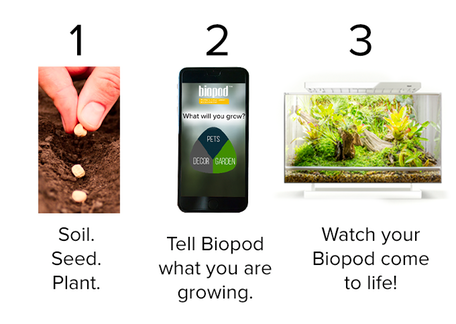
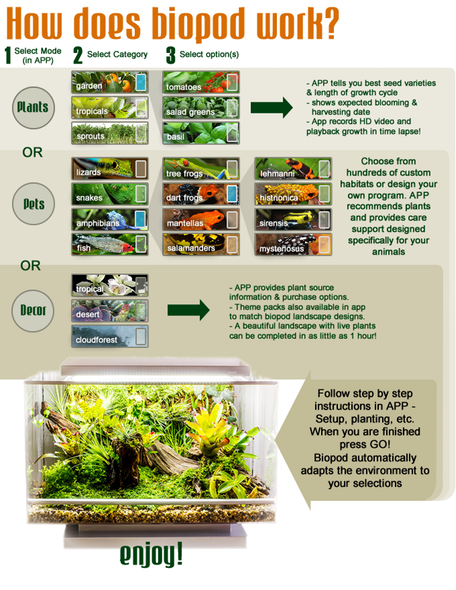
The Biopod App makes it easy to set up the perfect conditions for your pet's new home.


To grow a year-round garden.
Biopod combines the benefits of an aquaponics system with the ideal conditions of a greenhouse right inside your home. 
Just a few of the many things you can grow include herbs, lettuce, tomatoes, peas, etc… A great source for fresh salad and more!
Biopod will care for your garden, measure the soil conditions and tell you when it's ready for harvest. It will optimize growth for maximum production.


To add a low-maintenance enhancement to your home decor, even in small spaces.
Biopod creates a beautiful and relaxing backdrop for your living space. 
No time to take care of your plants? Biopod's automated, low-maintenance system will take care of everything from lighting to watering, while still offering opportunities to manually mist, seed or prune, if desired.
All you have to do is enjoy the pleasure you will receive from your Biopod!
A great addition for urban dwellers and seniors.


To educate minds, young and old alike. 
Biopod makes a great educational tool and is a fun way for kids (of any age!) to learn about nature and the delicate balance an ecosystem requires. 
Add a reptile to your Biopod and watch the wonderment and joy it will bring.
Biopod helps to build an awareness not only of life inside the 'pod, but also of the sensitive environment all around us.


To enhance the classroom experience. 
Biopod makes a great educational tool for visual and hands-on learning in classroom settings. Teachers and students can see different aspects of their environment including soil conditions, gas levels and moisture- all in real time. 
Classrooms can share their Biopod data with other classrooms from around the world and collaborate on observations and best practices. 


To encourage creativity, productivity, lowered stress and increased well-being in the work environment. 
Studies show that these are benefits which can be reaped when greenery and nature are included in the work space. 
Biopod has a sleek and beautiful design, which is compatible with nearly any office size and decor, and the fully-automated system makes it easy to care for. 

HOW SIMPLE IS BIOPOD TO USE?


HOW IT WORKS IN MORE DETAIL.


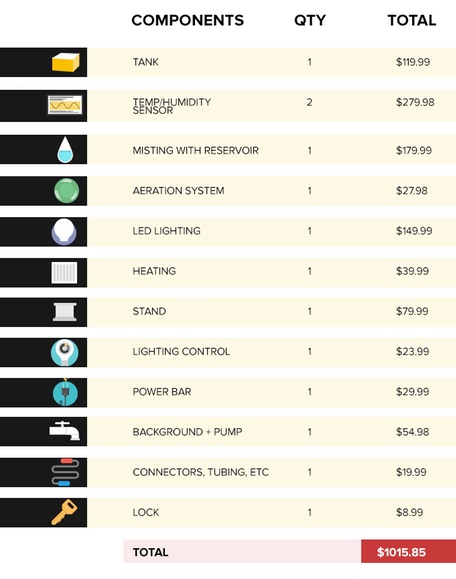
BUYING COMPONENTS INDIVIDUALLY CAN BE COSTLY 


All Biopod models include all of these components and much more at a fraction of the cost. 
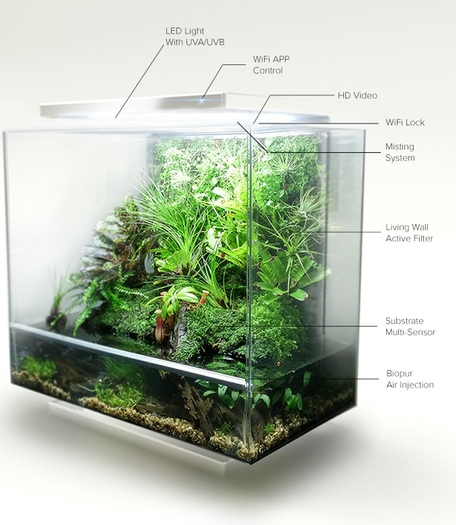
Biopod Features


biopod aqua 
Biopod aqua
 
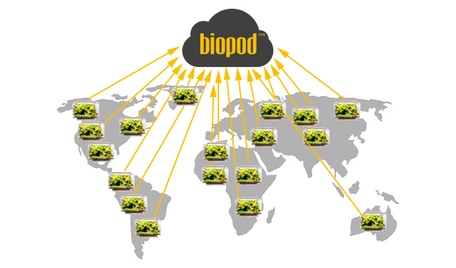
The Biopod Cloud. The Biopod Community. 


Each Biopod has the capacity to connect to The Biopod Cloud. Information from your Biopod can be shared with others around the world and vice versa, should you choose this option. This allows our Biopod community to draw on each other's experiences and wisdom. The data collected from our Biopod community can then be used to create better environments and best practises. Additionally, it will be a great tool for users who are not quite sure what they want to grow. Have a famous green thumb you follow? See what she's growing and tell Biopod to replicate it!

FREQUENTLY ASKED QUESTIONS
If the Biopod is used as an animal habitat, how is cleaning handled? Is there water filtration for aquarium applications?
The system is designed to reduce maintenance as it works like a self-contained ecosystem  the regular misting helps wash any waste to the ground and this is absorbed by the plants. The entire back wall acts as a biological filter for all units including the AQUA, harnessing both beneficial bacteria and plant roots to clean the water, similar to a vertically designed aquaponics system.

Does the Filter in the Biopod AQUA ever need to be changed?
The biopod living wall filter does not need changing, as the plant roots penetrate throughout the wall it works like an aquaponics system, essentially filtering water from the aquarium continually. In addition, beneficial bacteria colonise the living wall unit that work in unison with the plants to filter and detoxify the water.

What are the Biopod tanks made from?
Ultra Clear Low-Iron Glass – 5mm to 6mm depending on the unit. This is a high end, high clarity glass that does not have the green tinge of typical terrariums. Helps keep our modern look consistent

What animals are compatible with my Biopod?
The app will give recommendations for animals based on the size of each unit. While there are too any options to be listed on this site, we recommend that you consult published literature on the topic if there are specific animals you are working with or plan to put in your biopod. Keep in mind that our substrate technology allows for a very thin aerated and actively cleaned substrate, so you may not need the height commonly used for traditional terraria, which often have 6 to 8 inches of substrate.

LED lighting specs. How many Watts, what is the spectrum?
We use 3W, high output LED diodes with a colour temperature of 6000K. The diodes are designed specifically to emit a natural light spectrum with peaks at optimal wavelengths to mimic natural sunlight, helping both plant growth and vitamin D production in your pets with output of both UVA and UVB. The basic system is 36W, and up to 90 watts on current larger models such as the biopod GRAND. Total Lumen output ranges from 3600 to 9000 lumens.

My terrarium at home gets too hot, too dry or too wet - how does Biopod cool or humidify without constant misting?
The system is capable of humidifying without misting, and precisely regulates internal humidity without causing the typical over watering that can occur in some systems. In addition, biopod uses evaporative cooling by mixing dry air with humidified air. This is the result of the integrated BioPUR system which utilises the action of oxygenating the substrate (with the combined effect of eliminating stagnation and humidifying the air), and a special active ventilation strip. And if you live in a hot climate or require special care for cooler species we have built biopod to accommodate a chiller unit, and this will be an add on at a later date.

What kind of Potting Soil / Substrate can be used in Biopod?
We are programming the app to give detailed instructions on setting up different habitats, as well as substrates that work best with different types of plants. In general, we recommend a base of coconut coir for most applications.

What is the Warranty like? What happens if something stops working?
Biopod comes with a 1 year warranty against defect for all parts. All components are accessible from the rear of the unit, and are designed to be easily replaced. If anything goes wrong, tell us and we will send you replacement parts. If anything goes wrong after the warranty has ended, parts will be readily available and inexpensive to replace.

Do I need a WiFi connection to set up Biopod? What happens if my connection is lost? Will biopod stop working?
A WiFi connection is required only for initial setup. After the unit has been programmed, it will continue to run these programmed settings continually. So no need to worry if you lose your WiFi connection!


More In Depth Q&A

April 29, 2017

Corn Snake Care Guide

The Corn Snake

The Corn Snake Latin name:

Originally Elaphe guttata (now Pantherophis guttatus) Corn snakes belong to the Colubrid family, the largest snake family. 

As hatchlings, they normally measure 20-28cms (8-11in). 

Adults range from 1-1½ m (3-5ft) with males generally being longer than females. 

Their lifespan is up to 20 years and they are non venomous. 

Facts & Information Origin: 


Corn Snakes are native to the South Eastern United States, where they are found in open woods and grassland. 

They are common around farms and in cornfields, where they help to control rodents. 

Benefits of keeping: 

Corn snakes are hardy and easy to keep. 

They are docile and even tempered and well-suited to captive conditions. 

They become tame with regular gentle handling. 

They do not grow very big compared to other species and are the ideal first snake. 

Corn snakes are beautiful, dramatic-looking snakes, they have a background colour of orange, with black-bordered irregular red or rust coloured patches. 

Their belly is white with black squares on it. 

However, due to the ease with which they breed in captivity, many colour variations are now available, including blood red corns , striped corns and albino corns. 

Housing: 

It is advisable to start with a small pen such as an Exo Terra Faunarium for a hatchling, as Corn snakes are the “Houdini” of the snake world. 

They will find a way out of the tiniest hole, so a plastic container is best initially. 

This can be placed inside a Terrarium to ensure the correct temperature and then move them into the terrarium itself when they grow to about 60cm (2ft) at about 1 year old.

Corn snakes can be housed together or separately, although some males will object to sharing a vivarium with another male. 

Females can be housed together but should be separated for feeding as animals frequently compete for the same food item and may even try to eat each other! 

Substrate and Furnishings: 


Bark or wood shavings are ideal as a substrate.

It is a good idea to provide a hide at both the cooler end of the terrarium and the hotter end so as to give the snake a choice of warm security or cooler security.

The Exo Terra Snake Cave is perfect for this, or a Reptile Den which sticks to the glass, allowing you to look at your snake without disturbing them. 

If rocks are to be used to decorate the terrarium then ensure that there are no sharp edges, and that they cannot fall and crush your snake. 

A climbing branch would be appreciated by the snake and artificial plants and other terrarium décor will enhance the appearance of your set-up. 

Remove all droppings and clean the terrarium on a regular basis to prevent disease. 

Heating:

Corn snakes need a hot area of about 90F (32C) with a background daytime temperature of 80F (27C). 

At night, the temperature should drop to about 70 F (21 C). 

One of the best methods of heating for Corn snakes is an Exo Terra Heat Rock. 

Choose an appropriate size for your terrarium and position towards one end of it. 

This allows for the required temperature gradient. 

A digital thermometer should be placed near the hot end and one at the cool end of the terrarium to check the temperatures are correct.